

When an aging parent begins to need more help, the change is not always obvious. No single major event may suddenly make the answer clear. Instead, families often notice smaller changes over several weeks or months. Bills begin to pile up. The refrigerator looks messy. A parent who once enjoyed cooking stops preparing meals. Medication is missed. Friends are no longer being contacted. These changes can be hard for an adult child to interpret, especially when a parent can still have conversations, make some decisions, and insist everything is fine. Knowing the signs it is time for assisted living can help families look at the situation more objectively. The goal is not to label every change as a crisis. It is to notice patterns in daily life and understand what those patterns may be telling you about safety, independence, and the level of support a parent may need.
Why Families Almost Always Wait Longer Than They Should
Families often take too long to decide when to consider senior living because of emotional attachments and the stress of the change. The family home holds years of memories, and leaving it can feel like leaving the past behind for seniors. Parents may hide their decline, and children often ignore warning signs to avoid the reality. Moving a loved one away can feel like a betrayal or a failure to care for them. Moreover, misunderstandings about the cost and insurance can make the process seem impossible to manage. However, waiting longer often leads to crises such as a severe fall or major health emergencies. This ultimately forces the family to choose quickly.
Signs in the Home

The home can offer some of the clearest clues because it reflects what happens during the hours when family members are not present.
- Unopened Mail and Unpaid Bills
A growing pile of unopened mail can be a sign. You may notice important letters mixed with advertisements, unpaid bills, and financial paperwork no longer organized the same way it was before. You may also see overdue notices and duplicate payments for utilities that have been disconnected temporarily. There may be many reasons for this. Weak eyesight, difficulty concentrating, financial anxiety, and cognitive changes can make paperwork even harder. The key is noticing changes from your parents’ previous habits. If they once managed the household paperwork independently and now cannot keep up, it is a sign elderly parent needs help.
- Spoiled Food & Empty Fridge
The kitchen can reveal changes that a parent may not mention directly. Look for expired food, spoiled leftovers, an unusually empty refrigerator, or groceries no longer purchased regularly. A parent who once cooked several times a week may begin relying on packaged foods or skipping meals altogether. Sometimes the issue isn’t an inability to eat but the work involved in planning, shopping, preparing, and cleaning up after meals. Poor nutrition can contribute to weakness and fatigue, which can then make other daily activities more difficult. If eating habits continue to change, discuss them with a healthcare professional and consider what daily support would make meals easier.
- Housekeeping Is Slipping
A less organized home does not automatically mean an older adult needs help. The concern is when it is noticeable and continues. Dishes may remain in the sink for days. Bathrooms or kitchens may no longer be cleaned regularly. These changes can happen because cleaning has become physically difficult, exhausting, or simply too complicated to manage. Pay attention to whether the home’s condition is creating additional safety problems. Clutter near stairs, loose rugs, poor lighting, or blocked walkways can increase fall risk.
Signs in the Body
Physical changes can sometimes provide stronger evidence that a parent is struggling than anything they say during a conversation.
- Unexplained Weight Loss
Weight loss without any obvious reason is also a significant sign. There is a difference between a reduced appetite and major weight loss in a short time. Unexplained weight loss is often a warning sign that is frequently linked to medical illness, depression, and poor nutrition due to difficulty preparing meals. The concern is not a particular number on the scale by itself. It is a meaningful change from your parent’s usual condition. If clothing begins fitting differently, your parents appear noticeably weaker, or they frequently skip meals, a medical evaluation can help identify the cause. At the same time, the family can consider whether easier access to regular meals and daily assistance could improve the situation.
- Unexplained Bruising or a Fall
Falls are among the signs that families should take seriously. A fall may happen because of reduced strength, poor balance, vision problems, medication effects, or an unsafe home environment. Sometimes the reason is clear, but most of the time the parent cannot explain exactly what happened. Unexplained bruises can also raise questions, especially when they occur repeatedly. One fall does not necessarily mean a parent can no longer live independently. However, repeated falls, difficulty getting up without help, or a fall that results in a significant injury may indicate that the current living arrangement is becoming less safe.
- Medication Errors
Medication errors can be very risky for aging adults. If your parents are forgetting medication, taking a dose twice, forgetting a dose, being confused about medication, or losing track of which prescription should be taken at a particular time, it’s a sign of elderly parents declining. Some medications can have serious consequences if missed or taken incorrectly. Don’t assume it’s just ordinary forgetfulness; it may mean managing without assistance has become difficult. Support in a senior living community can help prevent these mistakes because trained staff can monitor prescriptions.
- Increasing Memory or Organization Problems
Occasional forgetfulness is common with aging. Forgetting a name and remembering it later, misplacing keys, or needing an extra reminder does not automatically indicate that a parent needs additional care. The more important question is whether memory changes are interfering with everyday life. A parent may repeatedly ask the same question, forget appointments, get confused about familiar routines, or struggle to manage responsibilities they previously handled without assistance. Is my mom safe living alone? Looking at her overall daily patterns helps answer this better than focusing on a single memory lapse.
Signs in Mood and Social Life
Changes in social behavior can be easier to overlook because they aren’t always tied to physical safety.
- Withdrawal From Activities
Notice whether your parents have stopped doing activities they previously loved to do. They may no longer garden, read, attend religious or community events, prepare meals, or pursue hobbies they once loved. They might spend longer and longer periods sitting at home with little activity. A change in interest is not always concerning. Older adults can naturally develop different preferences over time. Real concern starts when the withdrawal is broad and persistent. Watch for signs that they stop leaving home, driving, or interacting because it becomes too hard.
- Loss of Interest in Friends
Your parent’s social relationships can also provide important clues. They may stop calling friends, decline invitations, or become reluctant to have visitors. Someone who once looked forward to family gatherings may begin avoiding them. Social withdrawal can have many causes, including grief, depression, hearing difficulties, mobility limitations, or difficulty keeping up with conversations. It can also happen when an older adult feels that everyday activities have become too difficult.
Caregiver Burnout Signs
When discussing the warning signs of caregiver stress, caregivers often treat their own well-being as a second priority, believing that as long as the care recipient is safe, the system is working. This is a dangerous misconception. Your own well-being directly reflects the health of the caregiving environment.
- Your Own Burnout Counts As a Sign
Caregiver burnout can be a sign, and it does not happen overnight; it is a slow, gradual, damaging process in which emotional, mental, and physical resources are completely depleted. Caring for a person is a profound act of love. It is also an immense physical and emotional responsibility. Your own physical and emotional burden is a clear and valid sign that your parents may need professional care in a senior living community. It is a necessary step to protect both your health and theirs.
What Each Sign Usually Points To: Independent Living or Assisted Living
Not every warning sign points toward the same type of senior living. Some changes suggest an older adult may benefit from independent living, especially when the main issue is convenience, social connection, or household responsibilities rather than hands-on care. Independent living may be worth exploring when a parent:
- Can manage medications and personal care independently
- Is physically able to move around safely
- Mainly struggles with housekeeping or home maintenance
- Would benefit from regular meals and fewer household responsibilities
- Has become socially isolated
- No longer enjoys managing a large home
- Wants more opportunities for activities and community connection
- Has concerns about driving or transportation
When should a parent move to assisted living? Assisted living may be more appropriate to explore when a parent:
- Needs regular help with everyday personal or household tasks
- Is repeatedly making medication mistakes
- Has experienced falls or difficulty moving safely
- Is losing weight because meals are difficult to manage
- Is struggling with bathing, dressing, or other daily routines
- Has increasing memory problems that affect safety
- Cannot reliably manage important household responsibilities
- Requires more support than family members can consistently provide
FAQs:
- What are the warning signs an elderly parent is struggling?
Warning signs include major weight loss, missed medications, poor hygiene, frequent falls or bruises, and social withdrawal. Family members often notice these changes gradually.
- Is forgetfulness alone a reason to move?
Not necessarily. Occasional forgetfulness is a normal part of aging. However, if forgetfulness starts affecting safety, such as leaving the stove on, forgetting medications, or getting lost in familiar places, then it may be time to consider support.
- Does needing help with cooking mean assisted living?
Not always. Needing help with one task, like cooking, doesn’t automatically mean a parent needs to move. Many families start with in-home help or meal delivery services first.
- What if my parents refuse to talk about it?
This is common and understandable, since the conversation can feel like a loss of independence. Start with open-ended questions, and focus on their safety and quality of life rather than leaving their home.
- How long do families usually wait?
Families usually wait 1 to 2 years before seriously considering a senior living community. Common reasons for this delay include emotional attachment, guilt, fear, and uncertainty. The consequences can be severe injury, harder adjustments, and caregiver burnout.
What to Do in the Next 30 Days
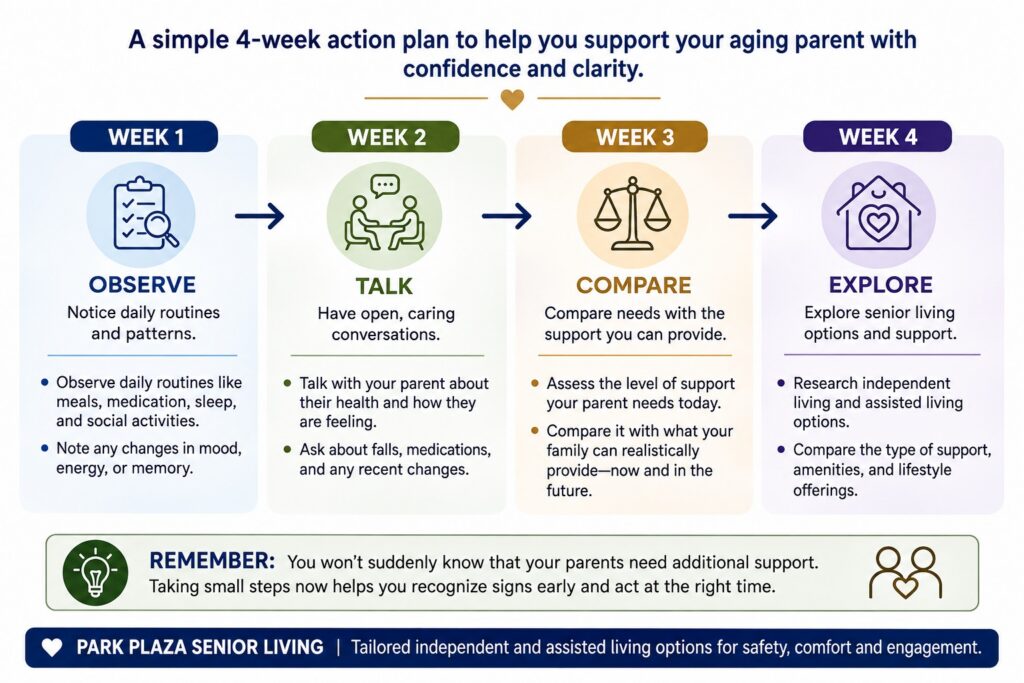
Start by observing your parent’s routine more closely. In the first week, note daily routines like meals, medication, and social activity. During the second week, speak with your parents about health changes such as falls and medication. During the third week, compare the level of support your parent currently needs with what the family can realistically provide. Consider both immediate needs and what may happen if those needs increase.
During the fourth week, explore senior living options and compare the type of support available. You can choose between independent living and assisted living based on the health needs and lifestyle of your loved one. You won’t suddenly know that your parents need additional support. This guide helps you recognize signs that your elderly parents are declining so you can take appropriate steps promptly.
At Park Plaza Senior Living, we offer tailored independent and assisted living options focused on your loved ones’ safety, daily comfort, and engagement. In our community, residents receive custom support plans, chefs prepare meals, we create vibrant social calendars, and maintenance-free apartments are designed to build genuine community connections. To experience the community firsthand, contact us or schedule a tour and request a detailed brochure today.

